

Prior TSOH Quarterly Updates:
Q2 ’21, Q3 ’21, Q4 ’21, Q1 ‘22, Q2 ‘22, Q3 ‘22, Q4 ‘22, Q1 ‘23, Q2 ‘23, Q3 ‘23, Q4 ‘23, Q1 ‘24, Q2 ‘24, Q3 ‘24, Q4 ‘24, Q1 ‘25, Q2 ‘25, Q3 ‘25, Q4 ‘25, Q1 ‘26
Q2 2026 Portfolio Changes:
Q2 2026 Top TSOH Research:
Planet Fitness: Maxing Out? (04/13/26)
Peloton: From Defense To Offense (05/11/26)
Vital Farms: The Price Of Growth (05/25/26)
Dollar General: Miles and Margins (06/08/26)
The “Too Hard” Pile (06/25/26)
Following a ~5% drop during the first quarter, Mr. Market found reason for renewed optimism: the S&P 500 erased all of its Q1 declines, with a nearly 10% year to date (YTD) return through 1H 2026. What that headline index return overlooks is volatility and pockets of pressure beneath the surface, particularly for the companies and industries not among the AI winners.
Recently, I’ve thought about how I can refine my investment approach to balance short-term opportunism with a long-term mindset, i.e. my willingness to be aggressive in taking position sizes up / down in response to sizable short-term stock price moves. As we look to recent TSOH investment decisions - most notably Dollar Tree (DLTR) in 2H 2024 and Peloton (PTON) in 1H 2026 - they provide indication of the direction I plan to keep moving towards: a more aggressive tactical posture on those infrequent occasions where the short-term and long-term opportunity align to justify a big swing.
In the months after my initial investment in DLTR and PTON (preceded by a period of years where I watched their development from the sidelines), both companies saw their stock price trade >50% below where they’d been at in the prior 12 months. At that time, my sense was that each stock presented a unique opportunity to take the position sizing meaningfully higher, even to a level that exceeded where I’d likely hold it at long-term (a higher weighting than I’d likely be at if I was restricted from tweaking its sizing for 3-5 years).
In the end, I chose to make a somewhat measured allocation to both stocks; DLTR was increased to a ~12% weighting in November 2024, and PTON was increased to an ~8% weighting in March 2026. While still in the relatively early stage of each investment, particularly on PTON, we can see with the benefit of hindsight that more aggressive action would’ve been rewarded.
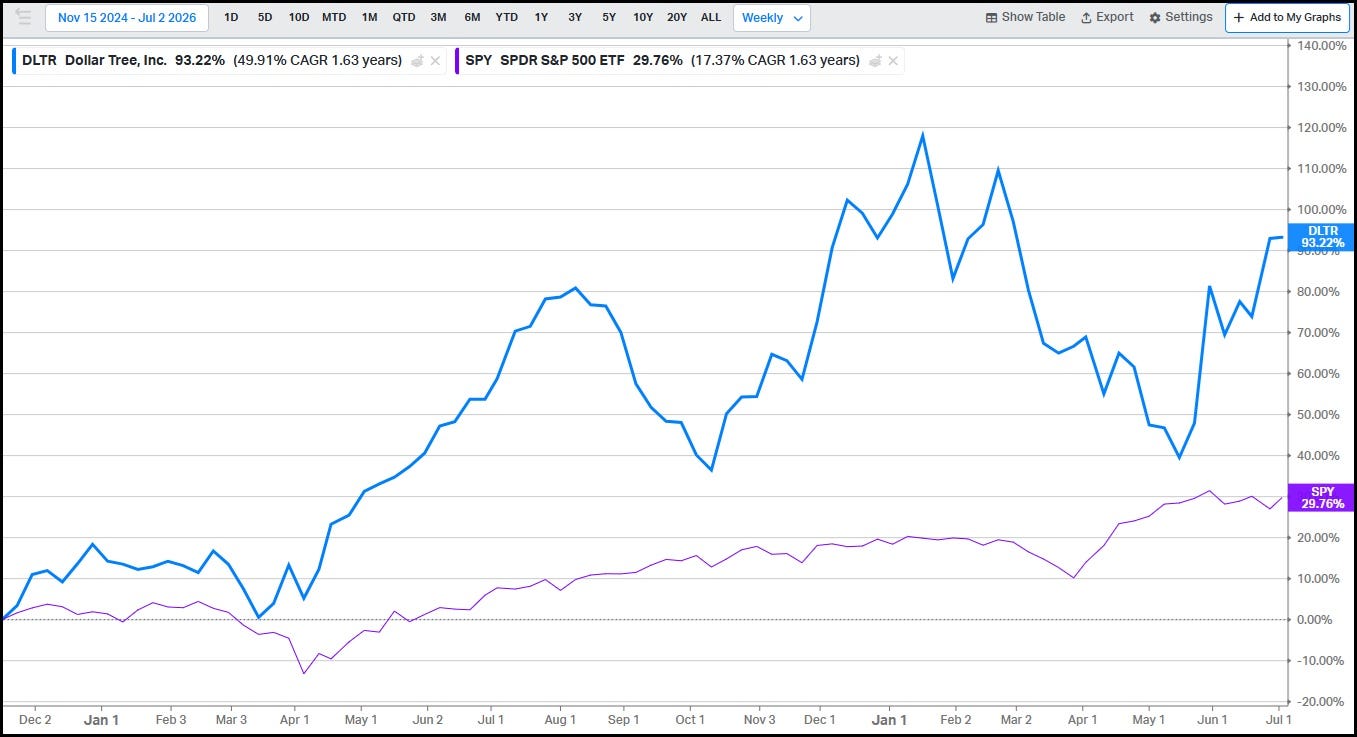
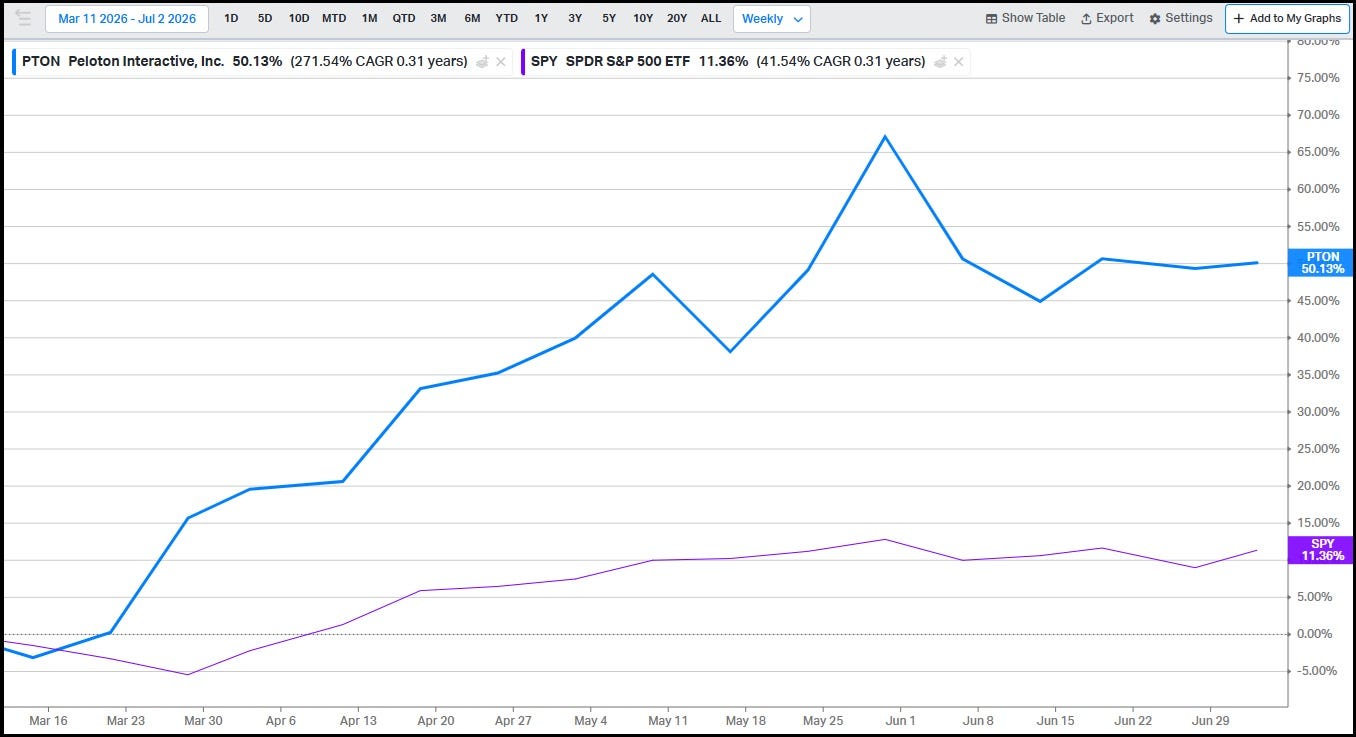
I was confident at the time of each investment that such an outcome was not only possible, but even probable. I waited a long time for a fat pitch that I thought was worth swinging at – and while I didn’t completely miss on either opportunity, I failed to fully capitalize on what proved to be a lucrative setup.
Personally, I find that developing the conviction to swing big is only half the battle; the other hurdle is determining which positions to trim / sell to fund the incremental buy. This requires a strong sense for opportunity costs. Over the years, I think I’ve developed a better sense for how to properly weigh the attractiveness of certain unique situations at a point in time - the Dollar Tree and Peloton examples. What I’m less confident about is how to do this more broadly, particularly on the relative attractiveness of the smallest positions.
Going forward, I envision a portfolio with about ten stocks that have a weighting near my ~5% minimum initial sizing, with another group of 2 - 4 holdings where the stars have aligned to justify a 10%+ weighting at a point in time. This isn’t too far removed from my current approach to portfolio construction, but it reflects a growing desire to be more aggressive and tactical. I need to make some compromises in the first bucket - through a smaller number of holdings and / or fewer that climb much above a ~5% weighting – to be a source of tactical aggression in the second bucket.
This speaks to a fundamental belief of mine, an idea examined in “The ‘Too Hard’ Pile”: I don’t swing very often – but when I do, the level of conviction expressed through position sizing must correspond to the rarity of those decisions, even if it’s more short-term / tactical in nature. The next time that I take a big swing, you should expect the position sizing to reflect this view.
Here’s the update portfolio weightings as of Friday’s close: