

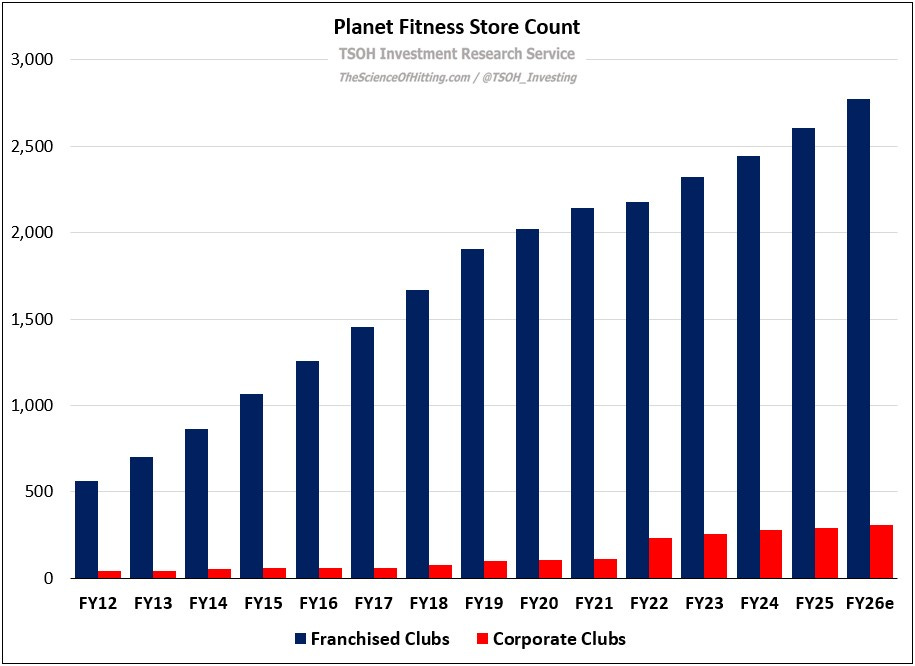
Long before its ascent to a national brand, Planet Fitness (PLNT) started as a single gym in Dover, New Hampshire; over the next 35 years, it became one of the largest operators of fitness clubs / gyms in the world, with ~95% of its ~2,900 stores located in the U.S. and Canada. As you can see below, this is primarily a franchisee model, consisting of ~2,600 stores owned by just 86 different franchisee groups. Note that the number of franchisee groups Planet Fitness works with has contracted by >50% over the past decade (nearly half of these franchisee partners own 10+ stores, with the largest at >200 stores).
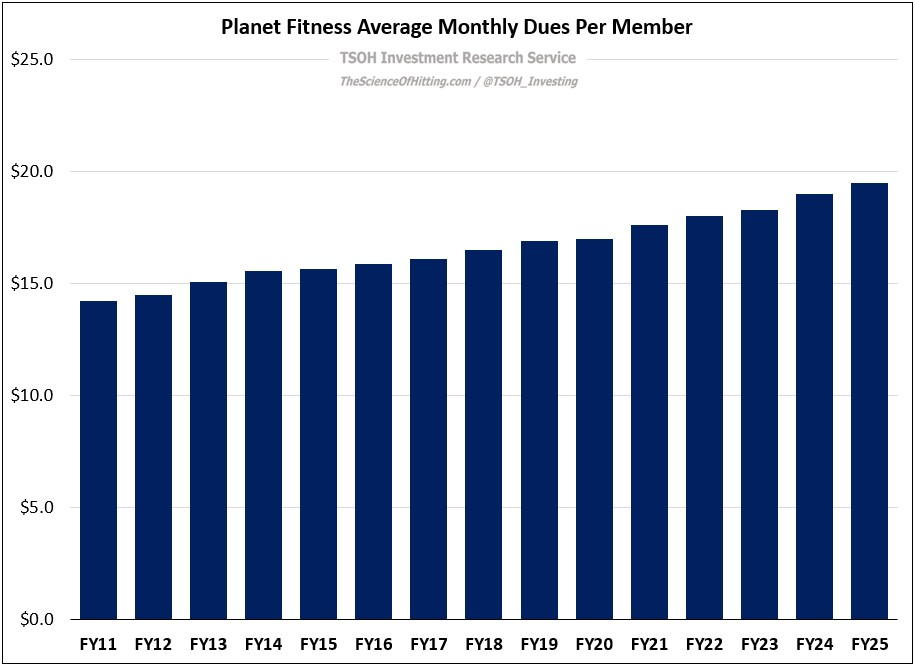
Planet Fitness aspires to be a judgement-free gym that’s accessible for the broader population, with a standard membership priced at $15 per month and a premium (Black Card) membership priced at $24.99 per month (for now); premium benefits include systemwide access, guest passes, and amenities like tanning equipment and massage beds. Including a $49 annual fee, the all-in cost of the Black Card is just ~$30 per month, compared to an industry average gym rate of ~$70 per month. For tens of millions of Americans, who desire an unintimidating and low-cost option as they start to (or at least plan to) work out, Planet Fitness is the leader in the space. (As detailed on slide 40, PLNT accounts for about 20% of U.S. adults with a gym membership.)
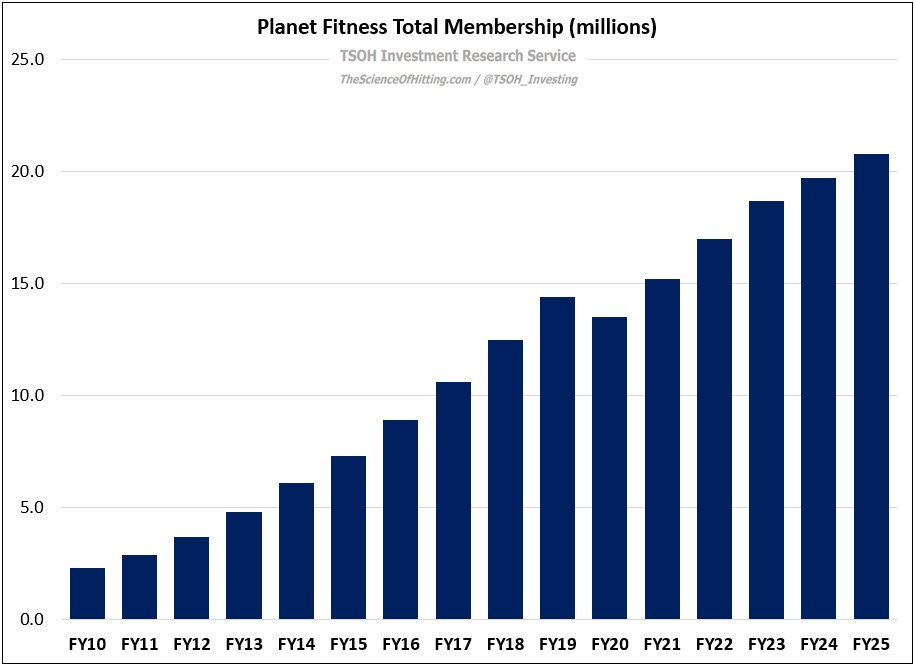
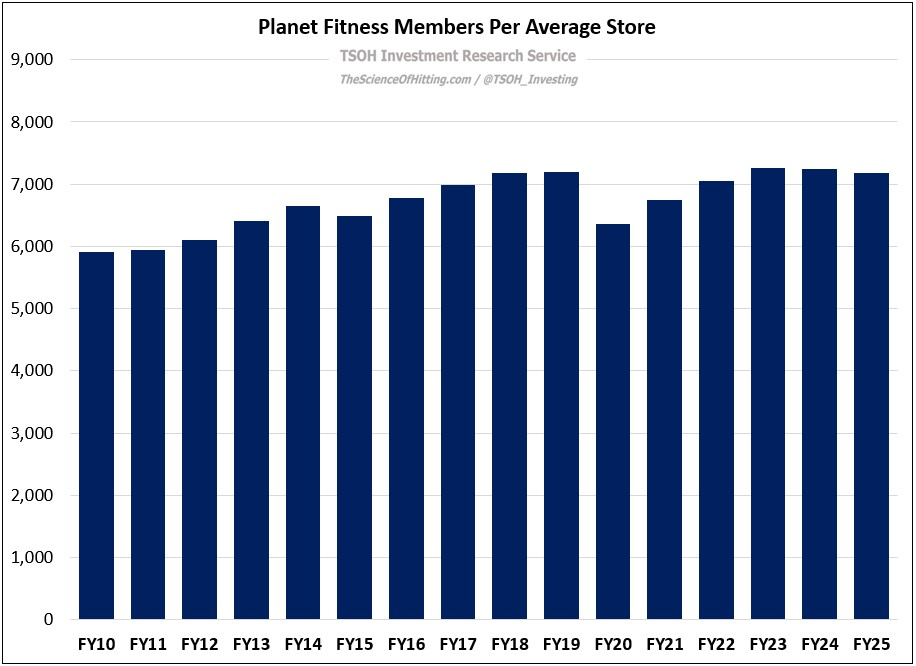
The reception to the high-value, low-price (HVLP) gym model that Planet Fitness has championed is evident in their membership statistics: PLNT ended FY25 with ~20.8 million members, which grew ~11% p.a. over the past decade (over the same period, Black Card penetration rose ten points to ~67%). As shown in the second chart, this primarily reflects the new unit growth tailwind, with per store members up ~1% p.a. over the same period.
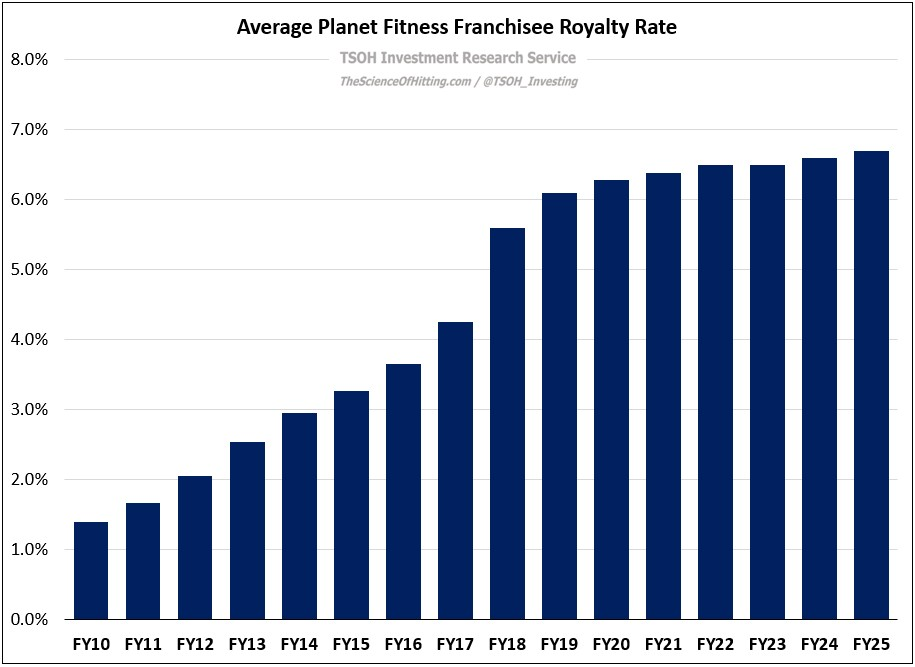
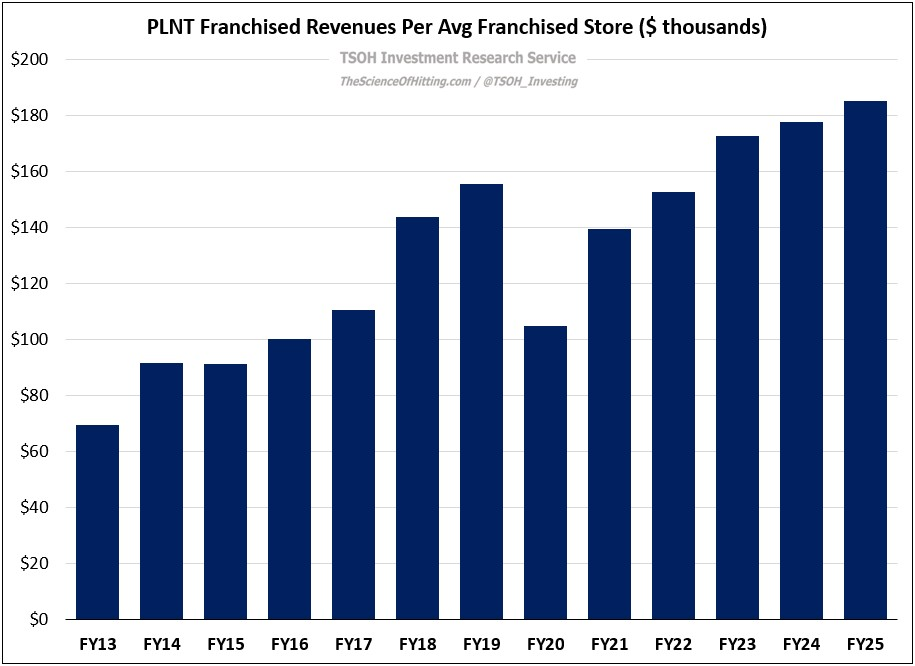
From a financial perspective, the average royalty rate paid by franchisees to PF was ~6.7% in FY25. Note that the royalty rate has increased substantially over the past 15 years; they first started to charge a fixed 5% royalty rate in 2010, with the rate increased from 5% to 7% in 2017 (the higher rate is applicable as franchisees renew existing agreements). With the rising royalty rate, franchised revenues generated by corporate per average franchised store roughly doubled over the past decade, from ~$91,000 in FY15 to ~$185,000 in FY25; that’s over a period where members per average store was up ~10% cumulative. (With the adoption of ASC 606 in FY18, franchisee contributions to national advertising funds began being included in franchised revenues, i.e. the reported royalty rate artificially rose by ~200 basis points.)
The average cost to build a new club is roughly ~$3 million, up from $2.0 - $2.5 million in the pre-pandemic years; the output is mature unit AUVs of ~$2 million and mid-30’s EBITDA margins (after accounting for royalties), leaving franchisee stores with low-to-mid-20’s cash on cash returns. Naturally, the relationship between the franchisor and the franchisees requires balance over time, particularly in a system that consists of a relatively small number of critical franchisee partners (the two largest franchisees account for ~15% of franchised clubs). Examples include timing requirements for replacing gym equipment, which were recently extended from 5-7 years to 5-9 years, along with the membership price increases. My sense is management leaned fairly heavily on its franchisees over the past decade to push the corporate financials; they need to ensure a reasonable balance is maintained with franchisees in the years ahead. (“The leak in the boat is the incremental money extracted from franchisees to keep the franchisor looking healthy. It was 5% royalties, now it’s 7%. It’s an extraction until, at some point, nobody wants to be a franchisee because there are better opportunities elsewhere.”)
One other item worth noting is recent C-suite turnover: CEO Chris Rondeau, who ran the company for a decade, was abruptly ousted in late 2023, and CFO Jay Stasz quit last month after 16 months in the seat (Tom Fitzgerald, who was at Planet Fitness before Stasz joined, returned as the interim CFO).
Capital Allocation & Valuation
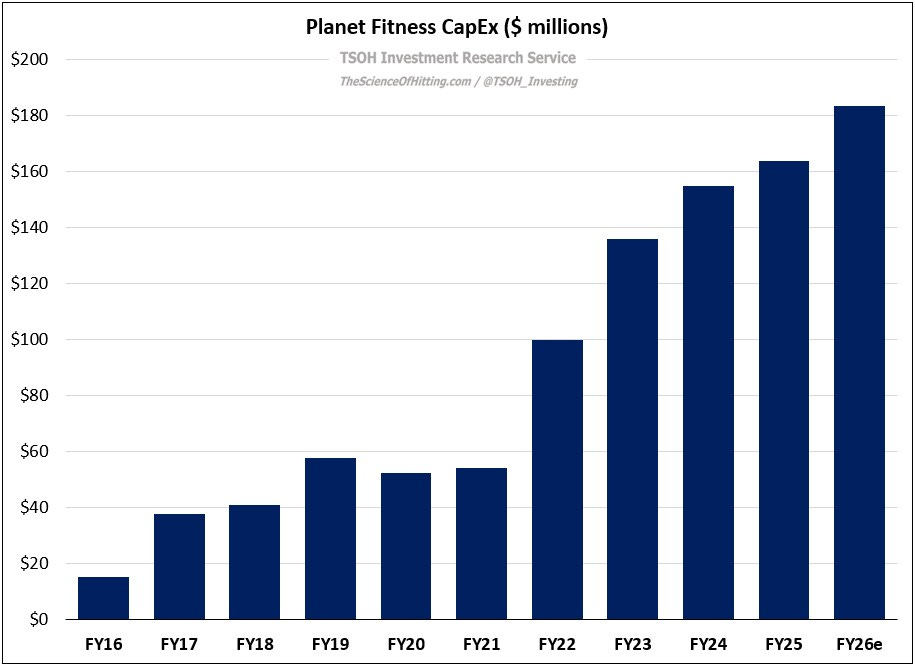
Given the company’s asset-light model, it’s notable that their FY26e CapEx budget is ~$180 million, or >3x higher than five years ago. This largely reflects an expansion of company-owned stores in international markets like Spain, which should be temporary (“we’ve engaged a banker to go to market in Spain; we’d love to bring in a franchisee partner to accelerate our growth”).
Beyond the CapEx ramp, the capital allocation priority has been repurchases: they bought back ~$925 million of stock over the past three years, inclusive of ~$500 million in FY25. With ~83 million shares outstanding and a stock price of ~$70 per share (down ~35% YTD), Planet Fitness has a market cap of ~$5.8 billion and an enterprise value of ~$7.8 billion; relative to FY26e adjusted operating income of ~$430 million, PLNT trades at ~18x EV / EBIT.
(In early 2022, Planet Fitness acquired one of its top franchisee, Sunshine Fitness Growth Holdings, in a transaction that was valued at $800 million, with roughly half paid in equity. Shane McGuiness, the co-founder and CEO of Sunshine Fitness, joined Planet Fitness as the President of Corporate Clubs after the acquisition – a role that he lasted in for less than a year.)
Conclusion
Much has happened since the August 2015 IPO, with the ~4.5x increase in the stock price over that period roughly matching its adjusted EBITDA growth rate (high-teens CAGR). That reflects significant growth in the store count and membership base, along with the tailwind from higher member prices, higher Black Card mix, and higher royalty rates. Success in the high-value, low-price (HVLP) subsegment has been broad, outpacing the rest of the gym market by a significant margin over the past 5-10 years (slide 34). In turn, capital has entered the space and supported the rise of HVLP competitors, such as Crunch Fitness and EōS Fitness – with the latter acquired in mid-2025 by TSG Consumer Partners (former majority owner of Planet Fitness).
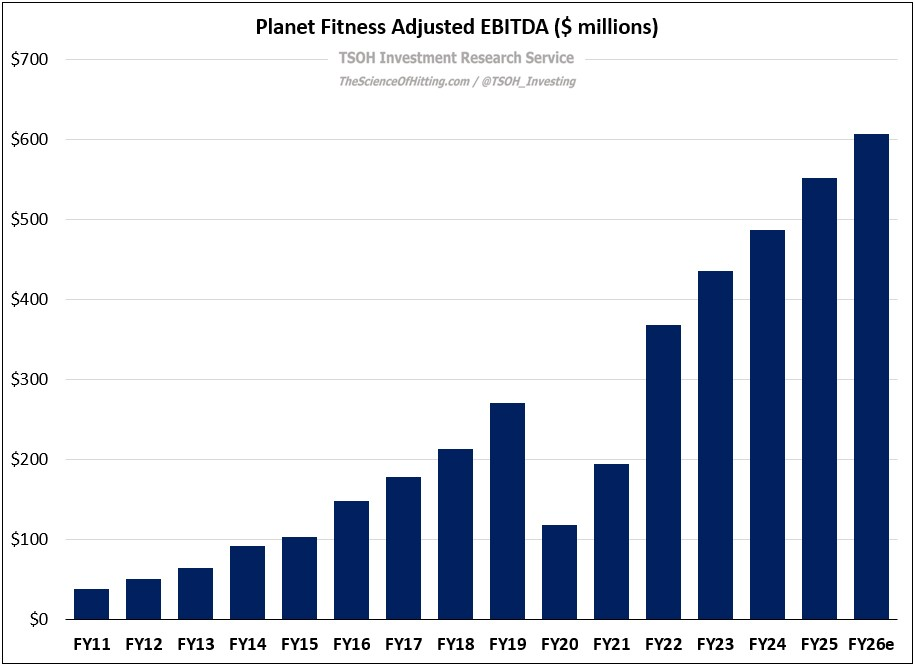
While management set optimistic growth targets at the November 2025 Investor Day, most notably a mid-teens adjusted EBITDA CAGR over the next three years (through FY28), they then guided to ~10% FY26 EBITDA growth in February. I find that to be a good summation of my early takeaways on Planet Fitness: they pulled a number of levers over the past 10-15 years to drive better financials, but I suspect there’s less low hanging fruit left to be picked. The road ahead will likely feature heightened HVLP competition and less room to take price. If that proves accurate, I will be interested to see how Mr. Market responds as the financials start lagging management’s targets.
NOTE - This is not investment advice. Do your own due diligence.
I make no representation, warranty, or undertaking, express or implied, as to the accuracy, reliability, completeness, or reasonableness of the information presented in this report. Assumptions, opinions, and estimates expressed in this report constitute my judgment as of the date thereof and are subject to change without notice. Projections are based on a number of assumptions, and there is no guarantee that they will be achieved. TSOH Investment Research is not acting as your advisor or in any fiduciary capacity.