

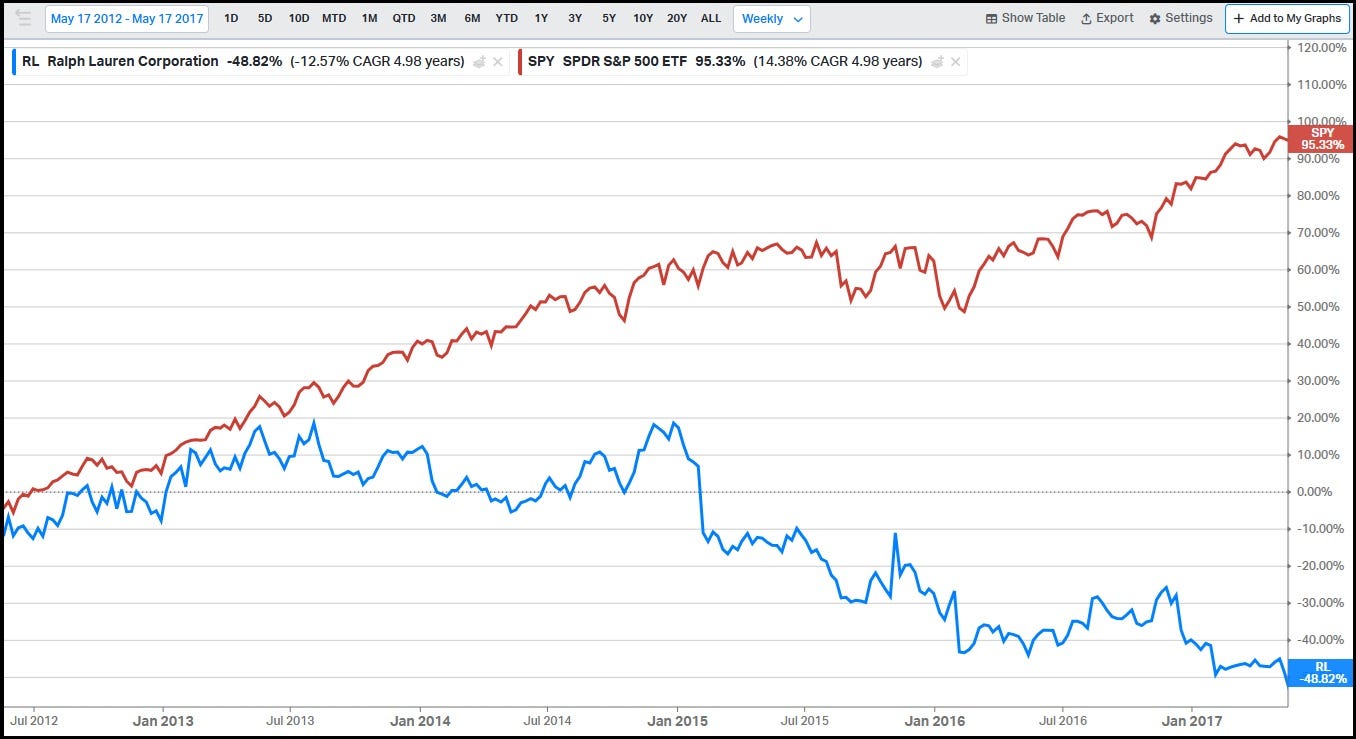
When Ralph Lauren hired P&G veteran Patrice Louvet as its CEO in May 2017, the brand appeared to be at a make-or-break juncture. Louvet’s appointment followed the abrupt departure of his predecessor, Stefan Larsson, who had held the CEO role at Ralph Lauren for less than 18 months. (WSJ on Larsson’s hiring: “The choice of an outsider as CEO comes as Ralph Lauren is trying to shore up its business, whose sales and profit have sagged this year. Shares have fallen about 44% this year, erasing nearly $5 billion in market value.”) As noted by Bloomberg, Louvet would be tasked with leading “a difficult turnaround at the preppy apparel brand”. Wall Street was unconvinced he was up to the task at hand: the company’s stock fell on news of Louvet’s appointment, to ~$72 per share. At that time, Ralph Lauren shares had declined by roughly 50% over the previous five years, compared to a near 2x climb for the S&P 500 over the same time period.
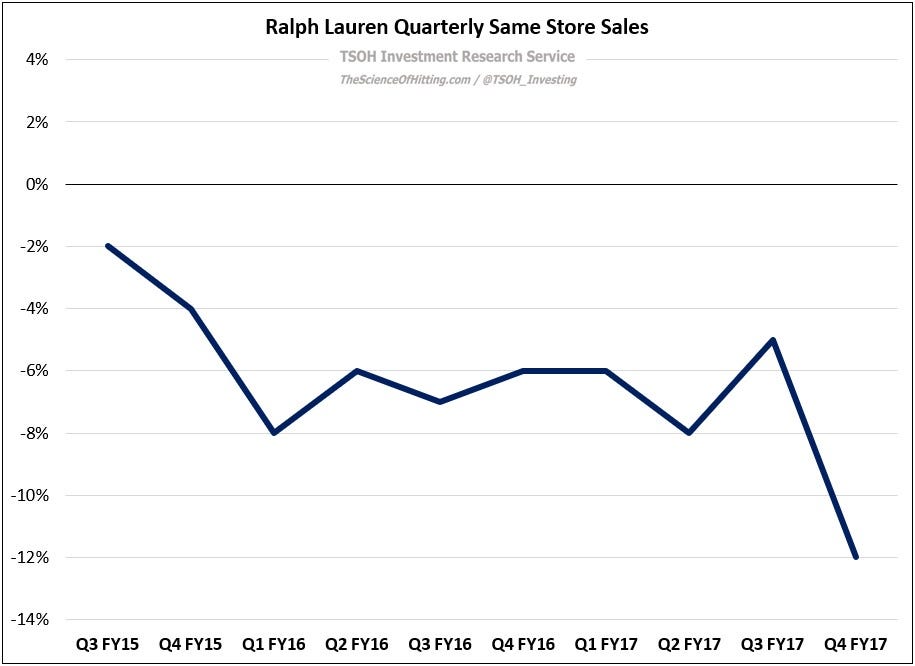
As noted in the Financial Times, the company had its fair share of challenges: “Ralph Lauren has faced competition from online competitors and fast fashion names like Zara and H&M that copy runway styles for a fraction of the cost and cycle through fashions at a rapid pace. The New York-based chain has seen same-store sales (SSS), a key metric, fall nine consecutive quarters.”
Louvet stated it more succinctly:
“Is Ralph Lauren still relevant, or has the brand’s time passed?”